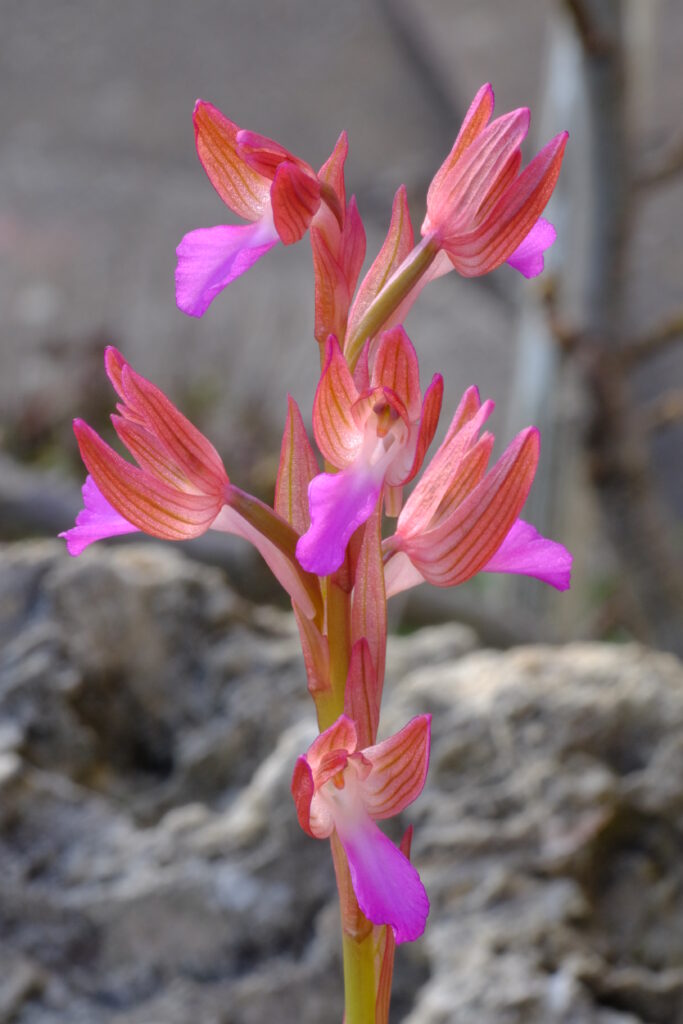
This is the group of *Orchis papilionacea* from the formerly large genus *Orchis*. It was reclassified by Bateman et al. (1997) into the genus *Anacamptis* and later by P. Delforge (2016) into the genus *Vermeulenia*, established by A. & D. Löve (1972). The most significant difference from all other species of the old *Orchis* group (including *Vermeulenia collina*) is the chromosome number of 2n = 32. Natural hybrids with the genus *Anacamptis* as defined by Bateman et al. (1997) (n = 36) are known. However, these are generally sterile.
Distribution:
The genus, as defined by P. Delforge, 2016 and CAJ Kreutz, 2024, contains 14 species. Its distribution is Mediterranean, ranging from Portugal to the Caucasus.
Plant Description:
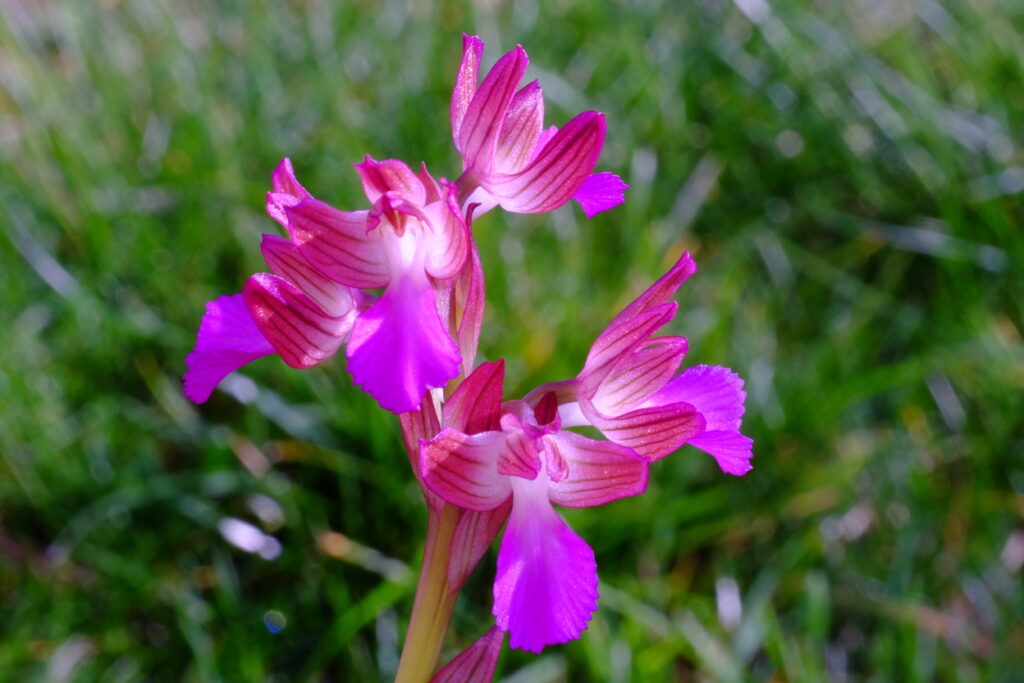
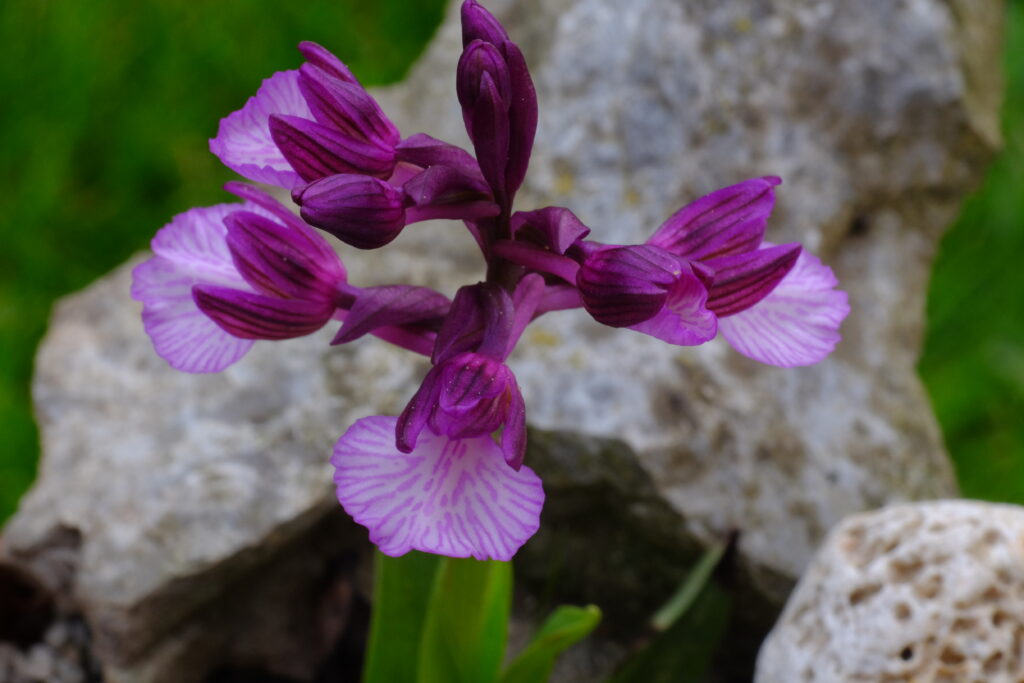
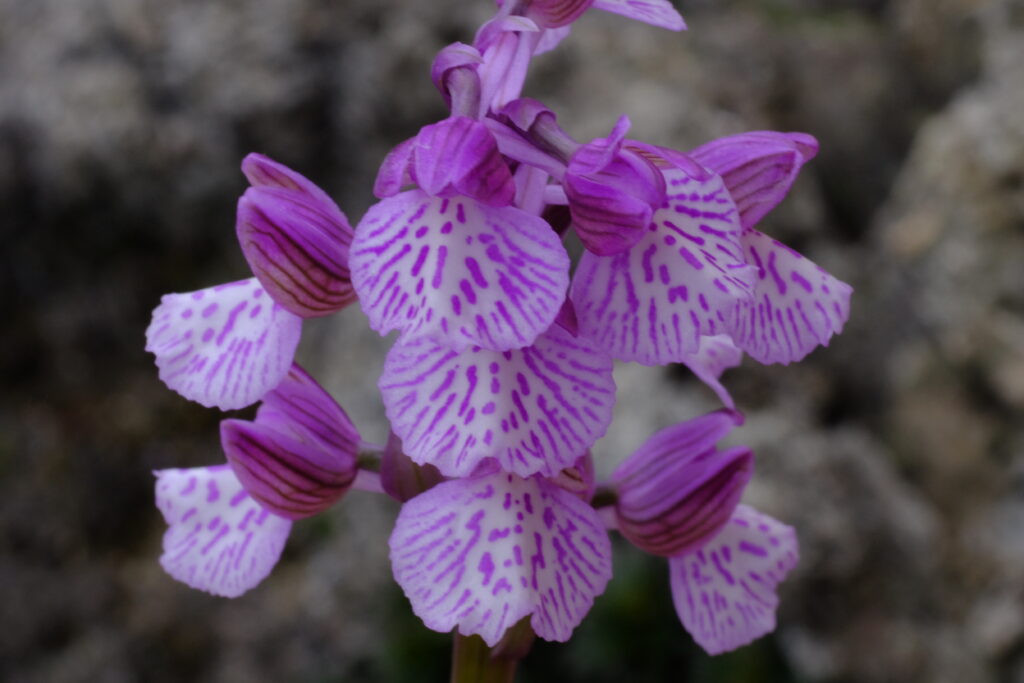
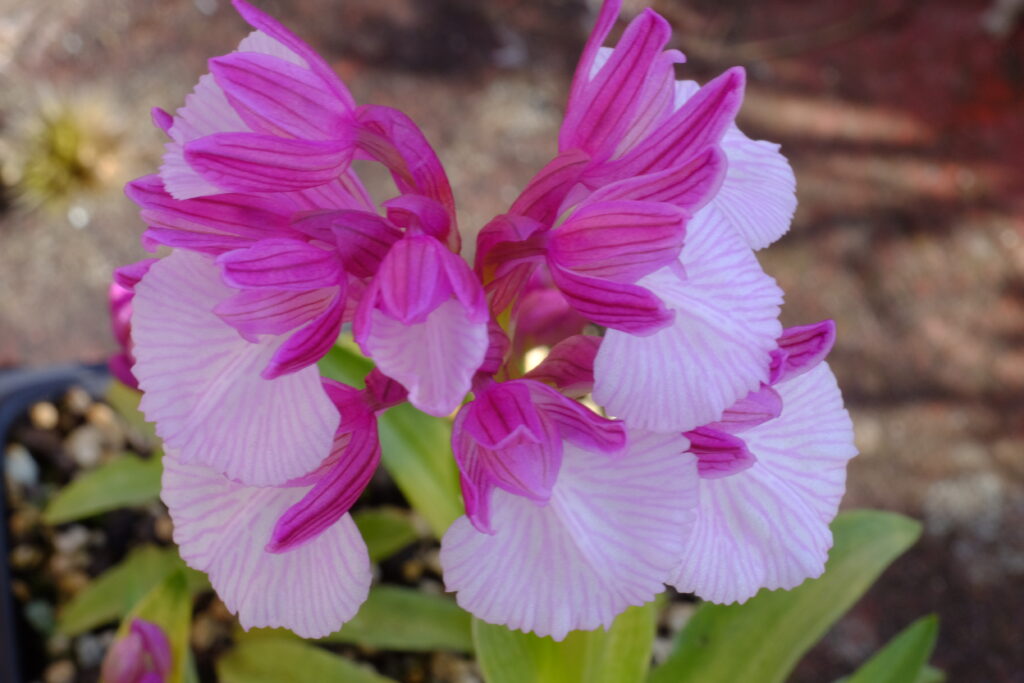
Inflorescences 10 to 30 cm tall, with a rosette of leaves. Vermeulenia has medium-sized, few, and loosely arranged flowers. The labellum always bears a spur. The lip is conspicuous and usually decoratively striped. All species are pollinated by insects.
Cultivation:
All species are easy to cultivate. The plants require a summer dormancy and survive as small tubers. The leaves appear in autumn. The plants flower in spring or early summer. Cultivate in as much sun as possible. Frost hardiness varies between species. Hardy down to -6°C. Regular watering during the growing season is essential for successful cultivation in containers. Watering is reduced once flowers appear and finally stopped completely once the plants go dormant. Keep completely dry during dormancy in containers. However, small plants and seedlings should receive occasional watering during the summer to prevent them from drying out. Cool nights and some rain will end the summer dormancy.
Recommended soil mixtures:
50% wood fiber mixed with 50% commercial potting soil or mineral (80%–90%), depending on availability. Volcanic granules, volcanic stratification, Seramis, or pumice with 10% to 20% organic components can be used. Wood fibers, TKS1, Floraton 3, or similar propagation substrates are suitable. The substrate must be well-draining with a pH of approximately 6.
Recommended reading:
Orchideen im Garten: Use, care and propagation. Gerd Kohls and Ulrich Kähler, 1993. Parey ISBN 3 489 636244.
Orchideen für den Garten: European and tropical terrestrial orchids. Alfons Bürger, 1992. Ulmer ISBN 3 8001 64876.
Die Orchideen Mitteleuropas und der Alpen. Presser Helmut, 1995. ecomed, ISBN 3 609 65600 X
Das Moor im eigenen Garten: Creating, designing and maintaining moorland gardens. Erich Maier, 2000. Parey, ISBN 3 8263 3301 2.
Hardy orchids. Phillip Cribb and Christopher Bailes, 1989. Timber Pr. ISBN 0 88192 147 5.
Orchids of Europe, North Africa and the Middle East., Pierre Delforge, 2006. A&C Black Publishers Ltd. ISBN-13 978-0-7136-7525-2.