Cultivation:
Sun orchids can be quite delicate to cultivate. However, many species are quite easy to grow, and some are even very simple. All plants are dormant in summer and survive as small tubers (tuberoids). The single leaf appears in late summer or early autumn, and the plants flower in late winter, spring, or early summer. Cultivate in the sunniest location possible. They are surprisingly frost-hardy down to -5°C (23°F). In mild regions, year-round outdoor cultivation is possible even in Central Europe. Regular watering during the growing season is essential. With the appearance of flowers, watering is reduced and finally stopped completely once the plants go dormant. Summer rain is not harmful to garden orchids, provided the soil is very well-drained. Potted plants should be kept completely dry during dormancy. Small plants and seedlings, however, should receive occasional watering during the summer to prevent them from drying out. Indoor plants should be temporarily moved outdoors in late summer. Cool nights and some rain will end their summer dormancy and stimulate new growth.
Recommended soil mixtures:
80 to 90% mineral, depending on availability. Volcanic granules, volcanic stratification, pumice, Seramis, 10 to 20% acidic organic components. Rhodohum and Sphagnum have proven effective. The potting soil must be well-draining, with a pH of 5 to 6. An organic substrate consisting of 90% Rhodohum with 10% mineral components also yields good results. For mineral substrates, fertilize with slow-release fertilizer. Approximately 1g of Klanz autumn fertilizer per plant. See also potting soil.
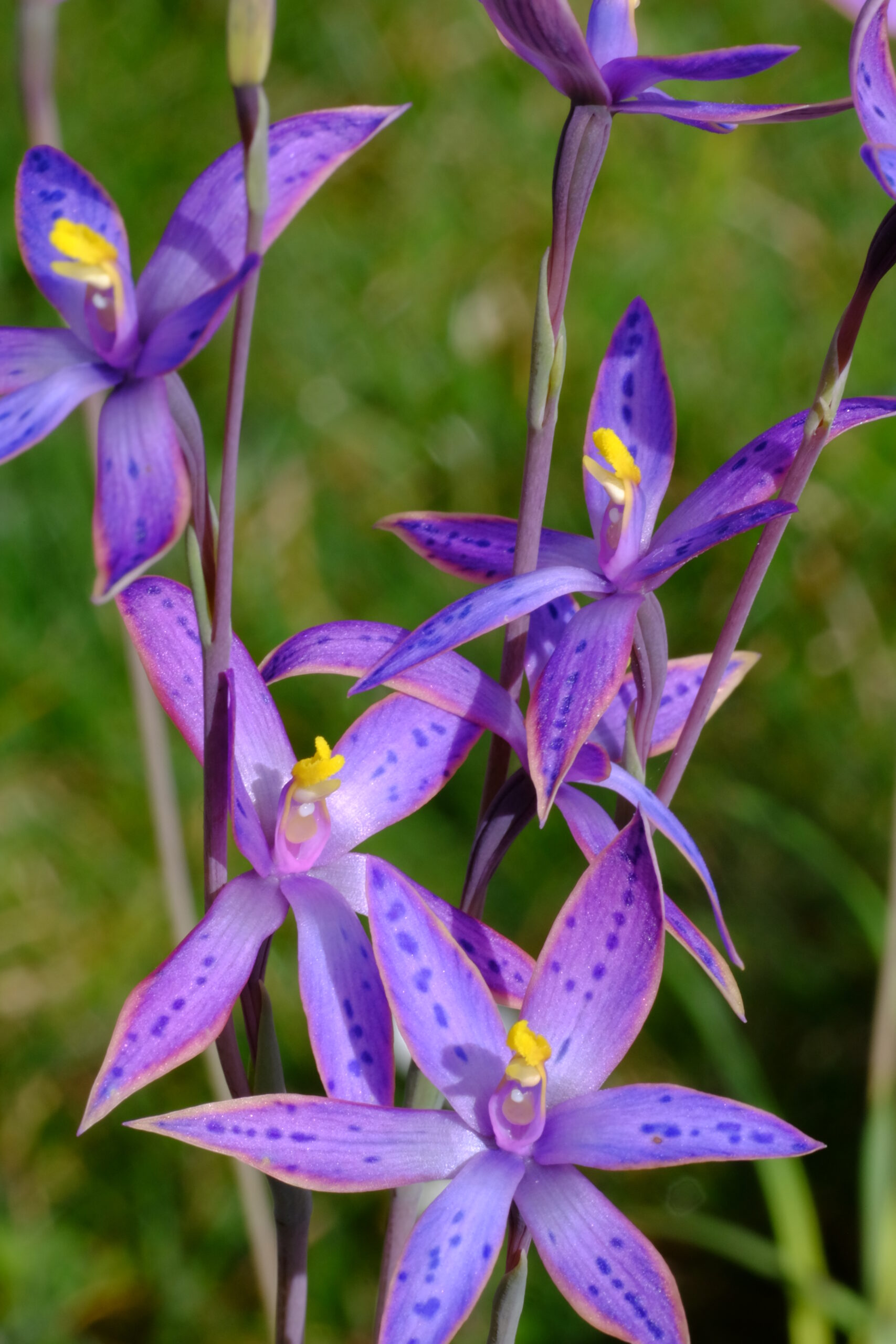
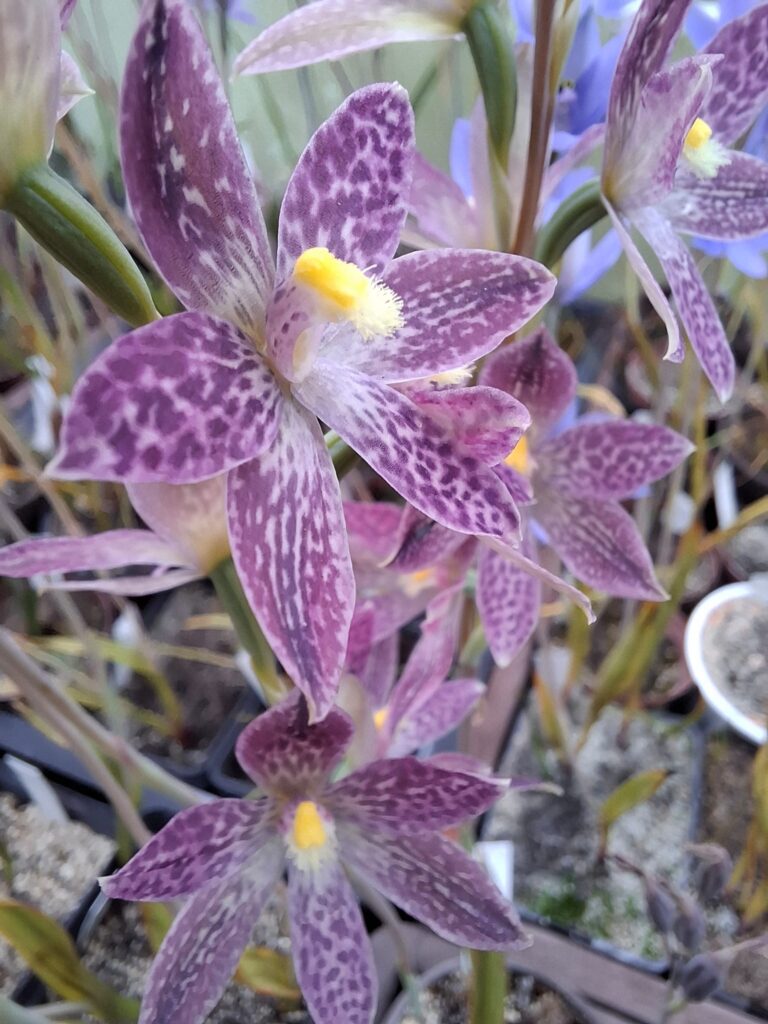
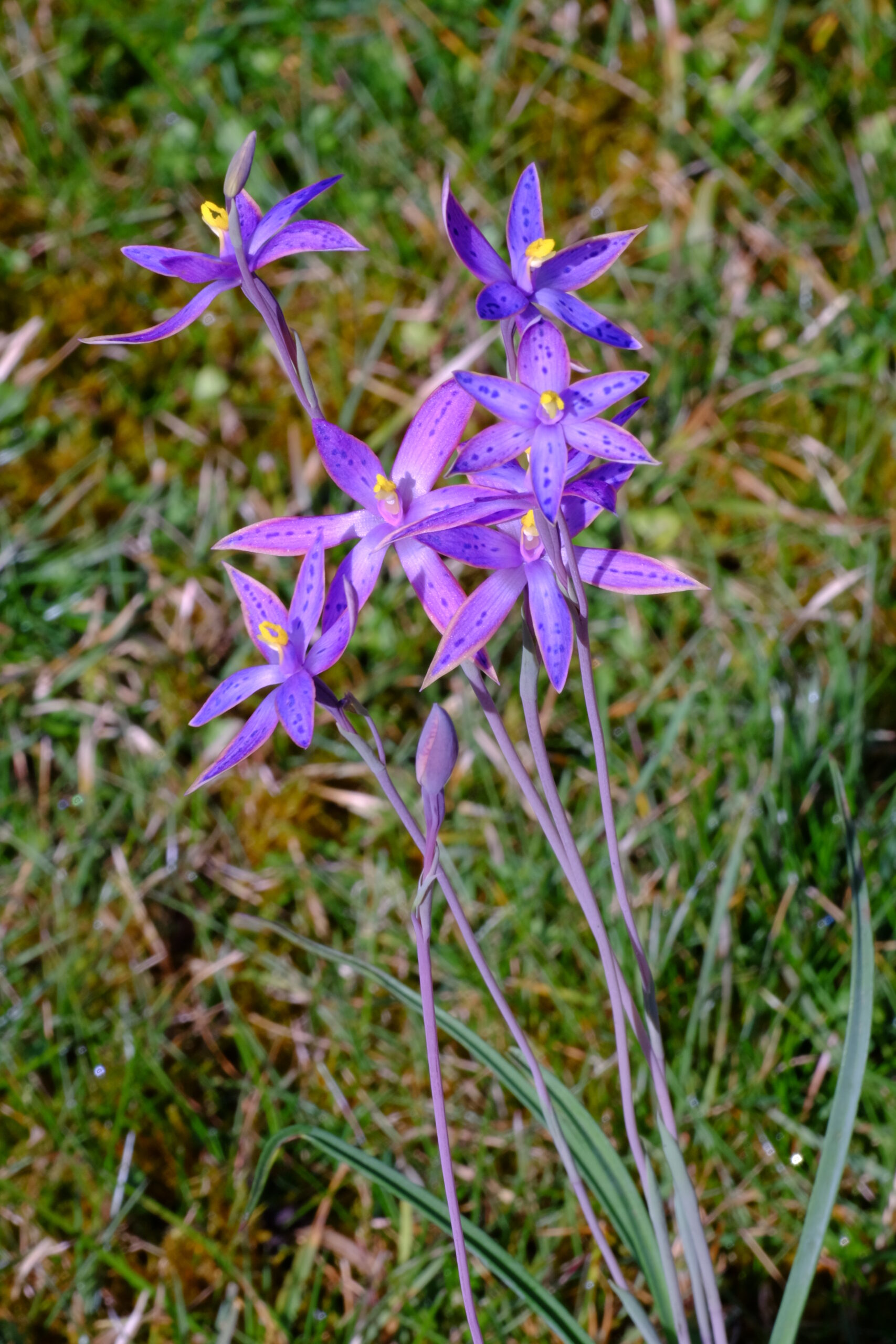
glaucophylla x variegata
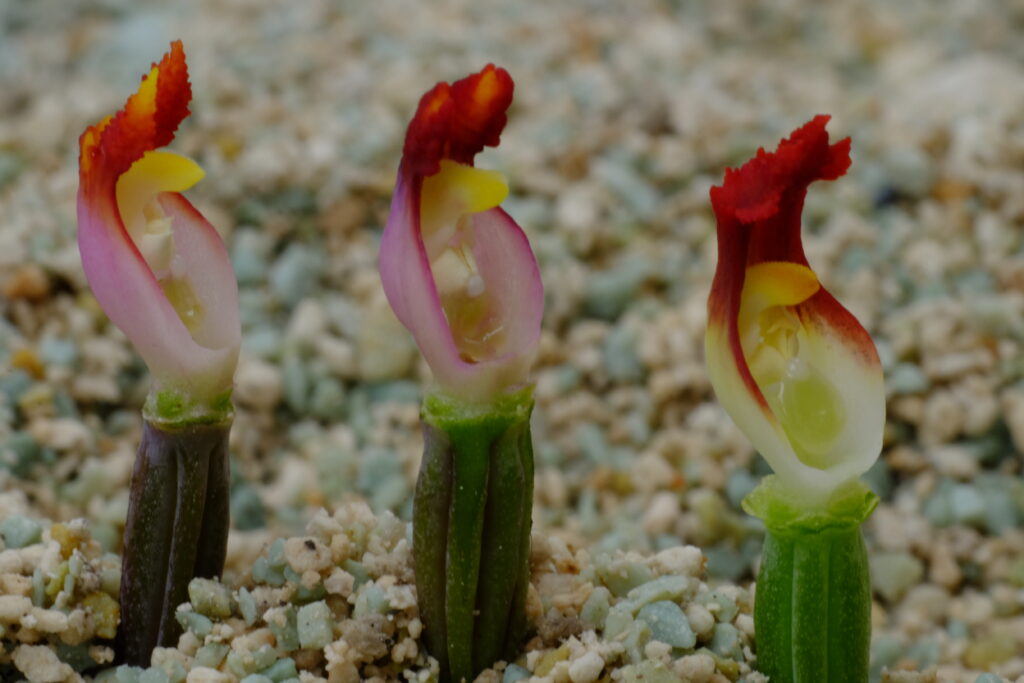
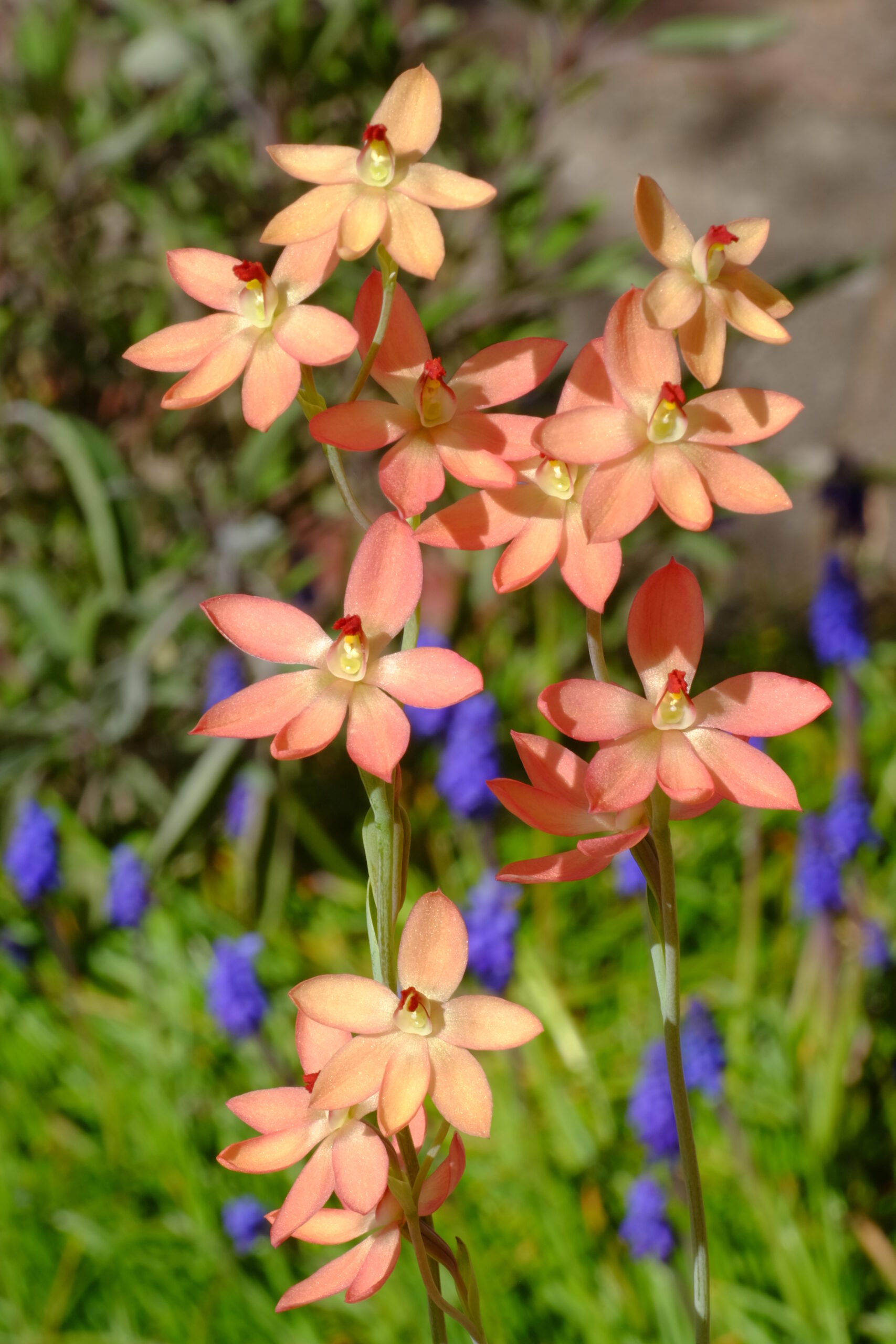
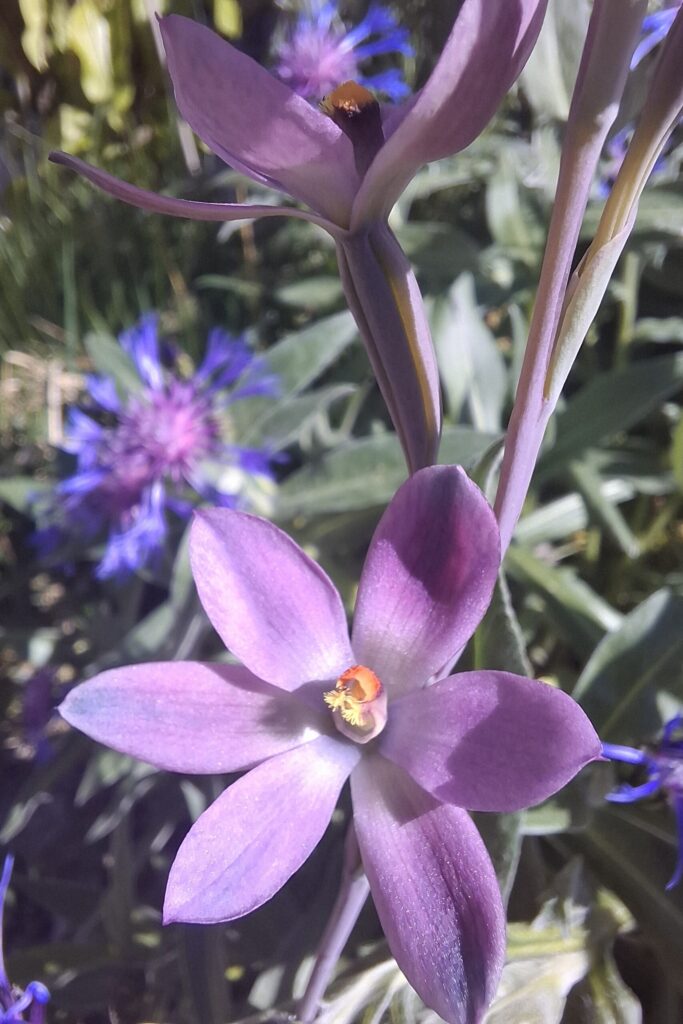
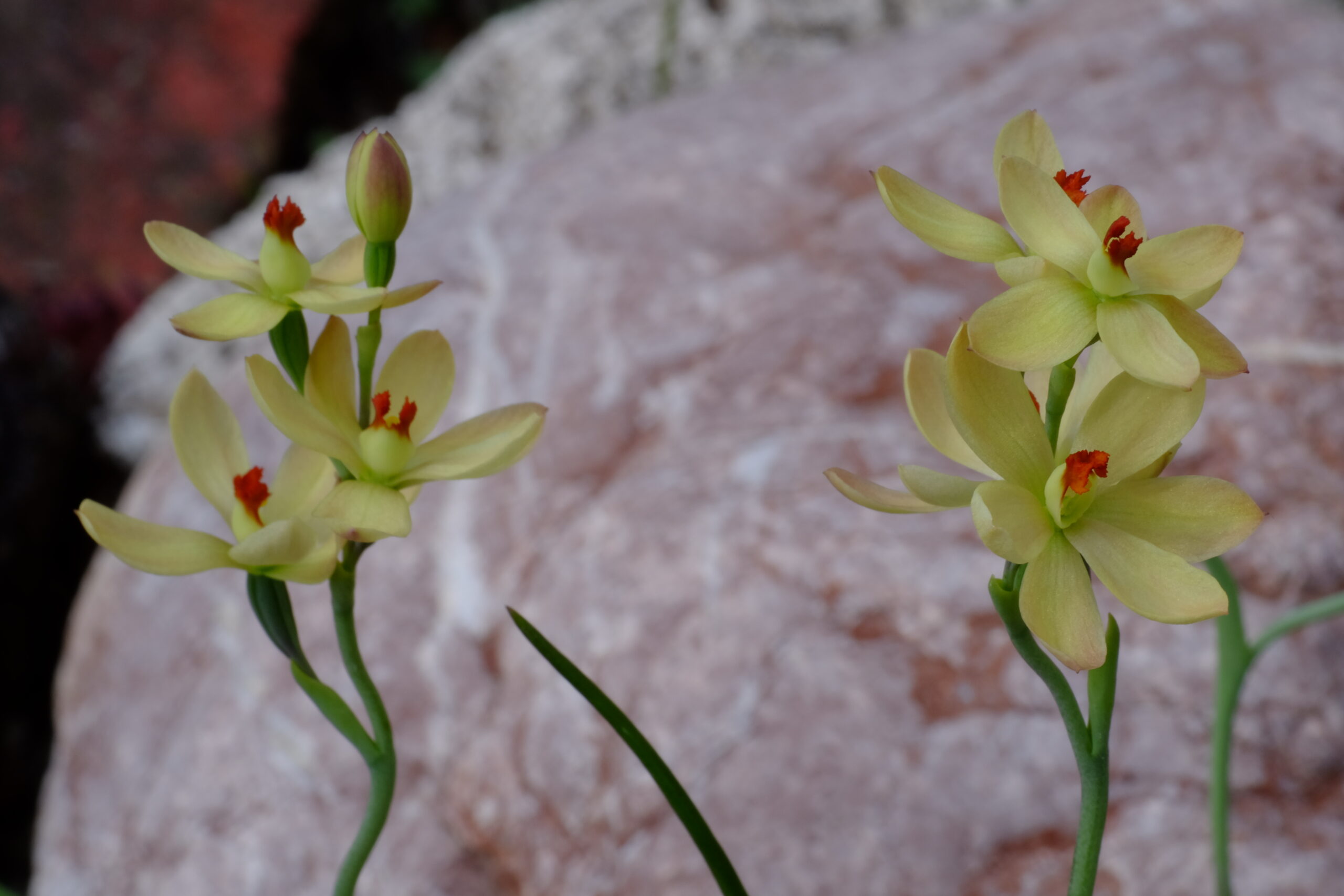
grandiflora x antennifera
Recommended reading:
Cultivation of Australian native orchids produced by the Australasian Native Orchid Society, Victorian group Inc. Helen Richards, Rick Wootton, Rick Datodi.
Orchids of Western Australia produced by the Western Australian Native Orchid Study and Conservation Group. Kingsley W. Dixon, Bevan J Buirchell, Margret T. Collins
Native orchids of Australia. David Jones, 1993. Reed, ISBN 0 7301 0189 4.
Orchids of south-west Australia. Noel Hoffmann and Andrew Brown, 1992. University of Western Australia Press, ISBN 1 875560 13 0.
The Orchids of Victoria. Gary Backhouse and Jeffrey Jeanes, 1996. Melbourne University Press, Carlton, Victoria. ISBN 584.1509945.
Field Guide to the Orchids of New South Wales and Victoria. Tony Bishop, 2000. Second edition. University of New South Wales Press. ISBN 0 86840 706 2.
Species – Remarks on the plants offered:
Thelymitra aff. holmesii.
Native to the Mount Frankland region of Western Australia. The flowers smell like strawberry jam. Flowering is fire-induced. In late summer, place the dormant tubers in a bag with a green banana in a warm, shaded location for a few days. Ensure no direct contact between the tubers and the banana. The ethylene produced will induce flowering.
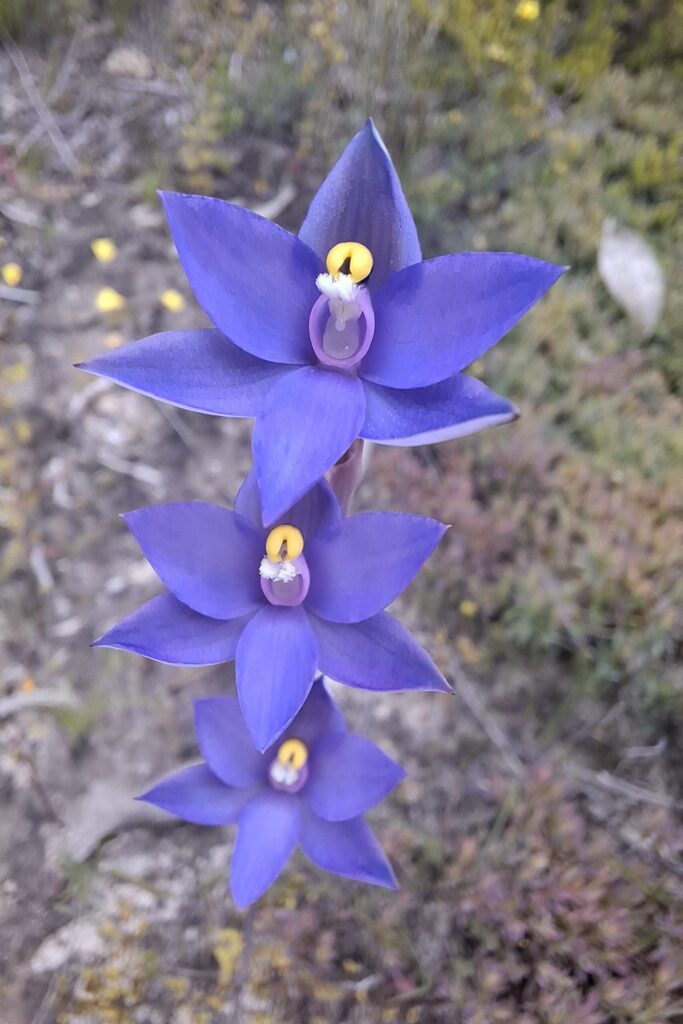
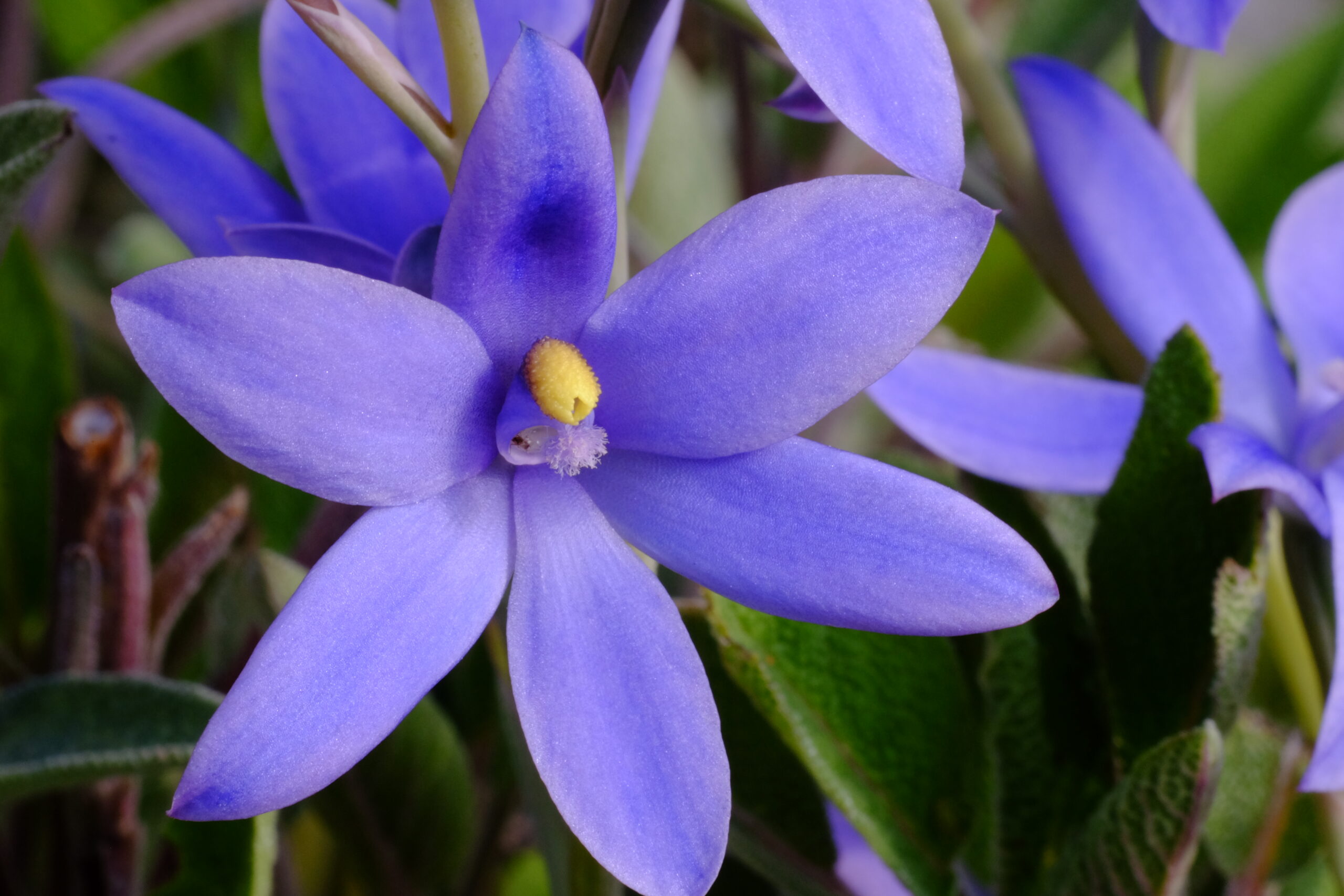
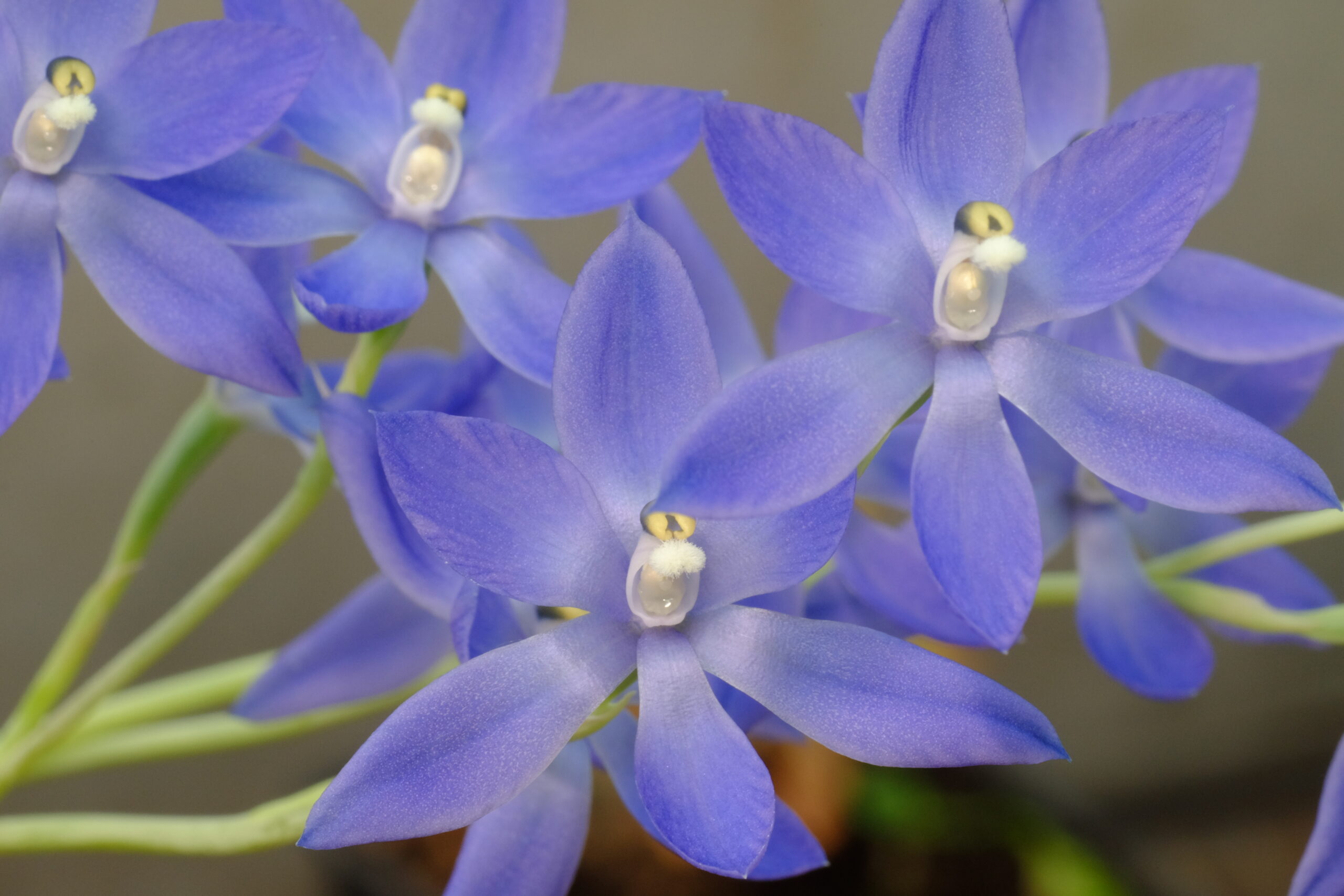
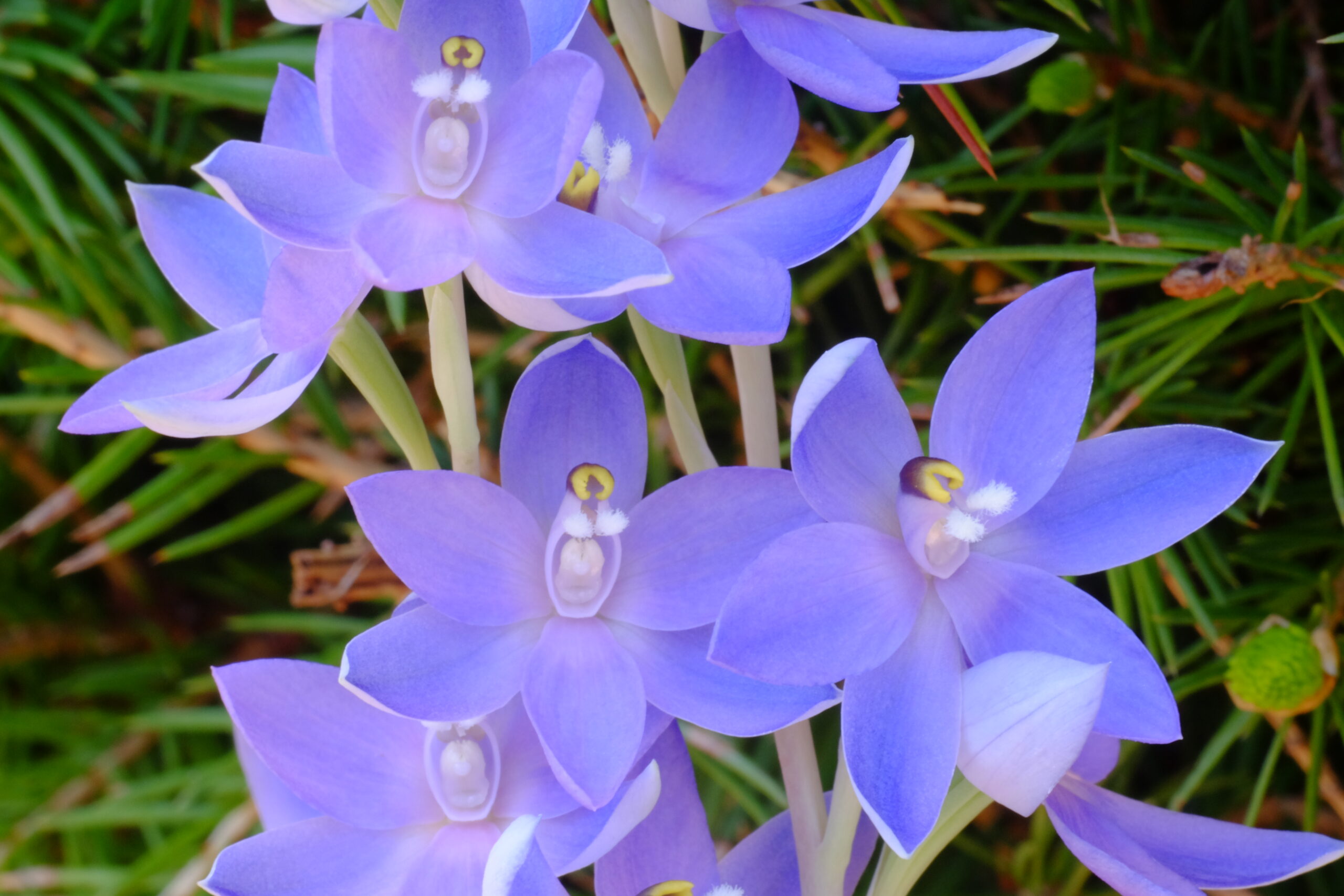
Thelymitra nuda X crinita. Tall plants with large flowers. A magnificent blue, like a cloudless sky. The mitre is adorned with a tuft of fine white to purple hairs. Not too difficult to cultivate. Hardy down to -4°C.
Thelymitra Cinderella. This doesn't show any of the extraordinary beauty of Thelymitra variegata. Nevertheless, it's a lovely plant. Easy to care for. Hardy down to -5°C.
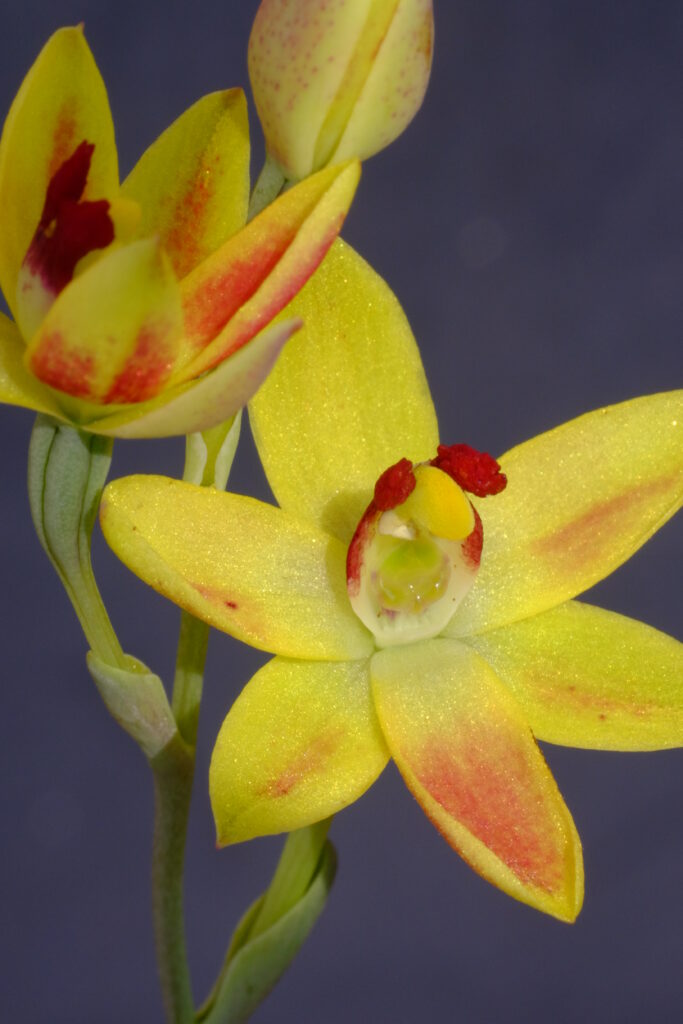
Thelymitra antennifera X variegata. Looks like a large, red T. antennifera. Easy to care for. Hardy down to -4°C.
Thelymitra macrophylla. This species is restricted to western Australia and distinguished by its large, leathery leaves. The flowers are similar to those of T. nuda from southern Australia, but usually pale blue. The fragrance also differs from that of T. nuda.
Thelymitra antennifera. Widespread from Western Australia to Tasmania. The seeds originate from Western Australia (Albany). Faintly lemon-scented.
Thelymitra aff. macrophylla. Seeds were obtained from Ron Heberle as T. macrophylla. The plants may be identical to T. aff. holmesii (Hoffman & Brown, 1992, page 267).
Thelymitra X dentata (longifolia X pulchella). Known as a natural hybrid in New Zealand. This cross was replicated by Dough McCrae in the 1990s using New Zealand species. Unfortunately, the plants are not very fertile. However, offspring were obtained from a cross with Thelymitra nuda. T. X dentata does not flower in Central Europe until May or June.
Thelymitra Sleeping Beauty. Lovely, fragrant, pink flowers. Parents are Thelymitra nuda and Thelymitra Kay Nesbitt. This sun orchid is very easy to cultivate. Hardy down to -5°C.
Thelymitra cyanea. This sun orchid requires consistently moist soil. Its dormancy period in summer is only a few weeks. When cultivated year-round, new leaves appear before the old ones wither. The seeds originate from Tasmania and it is frost-hardy down to -7°C.