Distribution:
The genus contains 5 species. Distribution in North America, Cuba and the Bahamas.
Plant Description:
Slender plants. Flower stalks up to 30 to 40 cm tall. From the overwintering bulb
wächst ein einzelnes schmales Blatt und 1 bis 7 rosafarbene bis dunkelrote (selten weiße) Blüten
They appear in early summer or summer. The flowers are large and decorative. The lip of the
Calopogon flower is located at the top, not the bottom. The bushy, beard-like outgrowth
serves to attract pollinators.
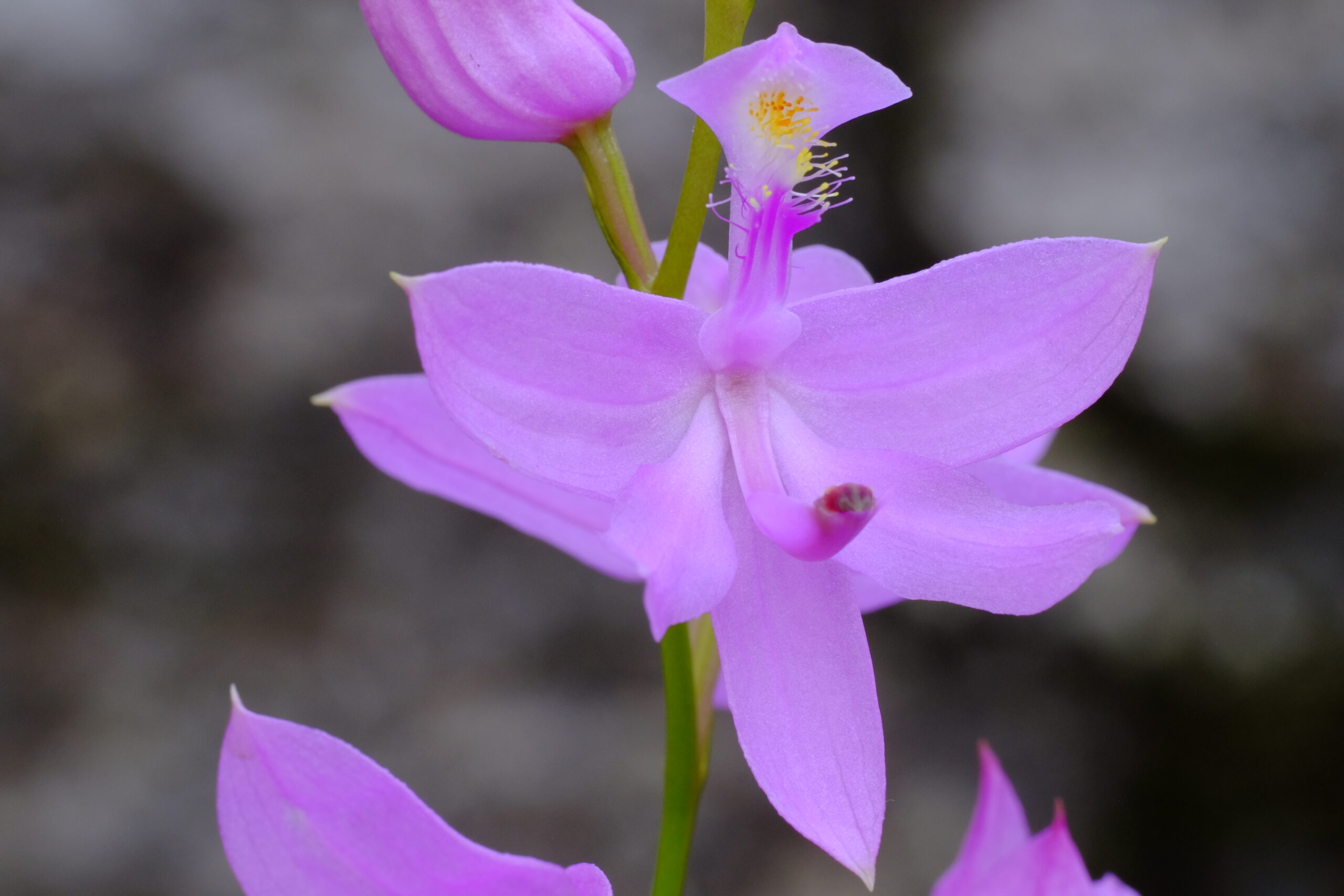
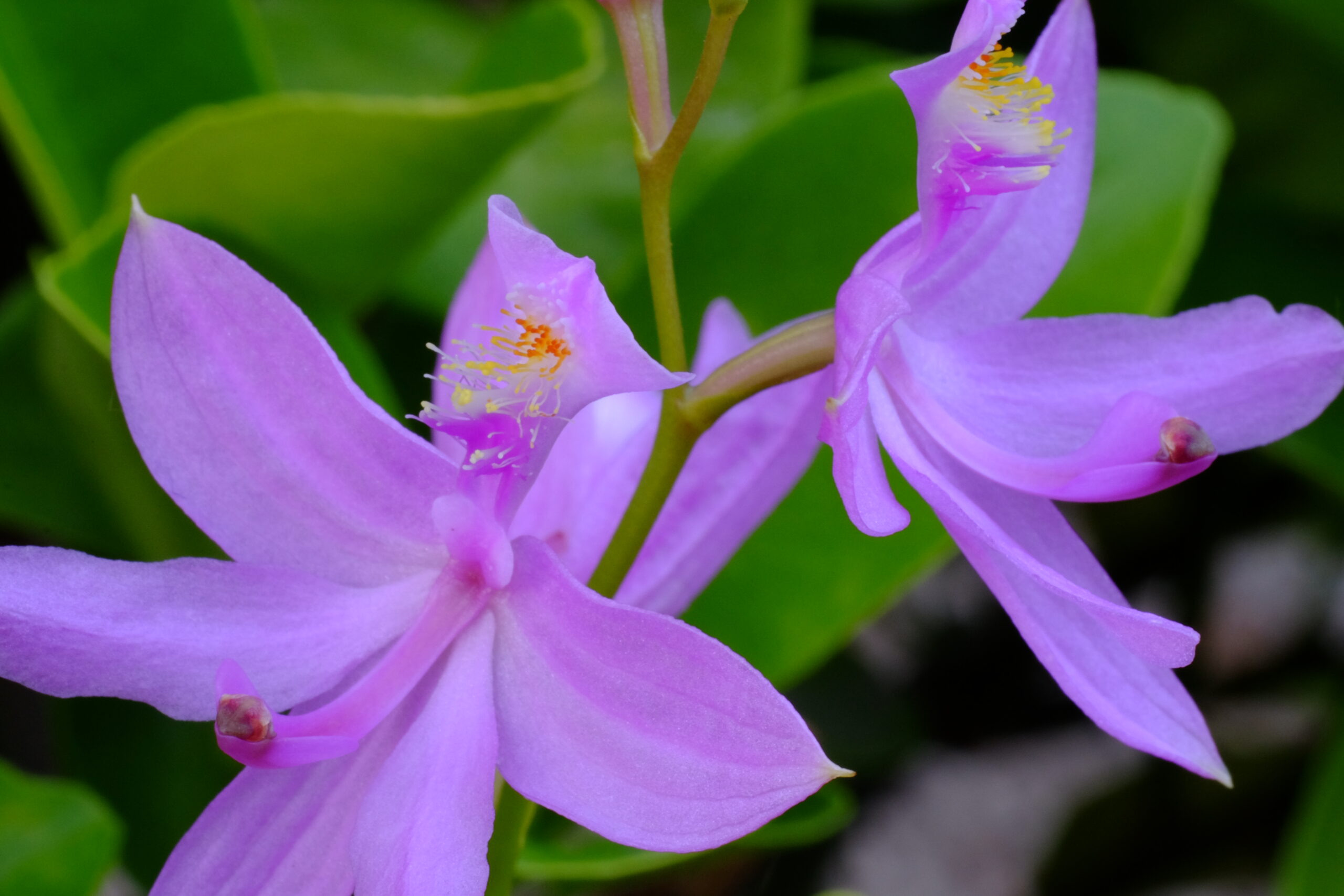
Calopogon tuberosus
Cultivation:
Only Calopogon tuberosus is reliably winter-hardy. Its natural habitats are fens,
High moors, damp pine forests, and spring areas. Easy to cultivate. The individual
The grass-like leaves appear in April or May. The 15-40 cm tall flowering stem emerges from
May – July. After flowering, the new bulb develops. Calopogon tuberosus thrives best in sphagnum moss or pure peat. Location: sunny, moist to wet, but the bulb should not be submerged in water.
Recommended soil mixtures:
Unfertilized ericaceous compost, peat or sphagnum moss. No fertilization.
Recommended reading:
Orchideen im Garten: Verwendung, Pflege und Vermehrung. Gerd Kohls and Ulrich Kähler, 1993. Parey ISBN 3 489 636244.
Orchideen für den Garten: Europäische und tropische Erdorchideen. Alfons Bürger, 1992. Ulmer ISBN 3 8001 64876.
Hardy orchids. Phillip Cribb and Christopher Bailes, 1989. Timber Pr. ISBN 0 88192 147 5.
The moor in your own garden: Creating, designing and maintaining moorland gardens. Erich Maier, Parey, ISBN 3 8263 3301 2.
Orchids of Indiana. Michael A. Homoya, 1993 by Indiana Academy of Science. ISBN 0 25332864 0.