Distribution: Approximately six species are distributed in the temperate regions of North America and East Asia. They do not occur naturally in Europe.
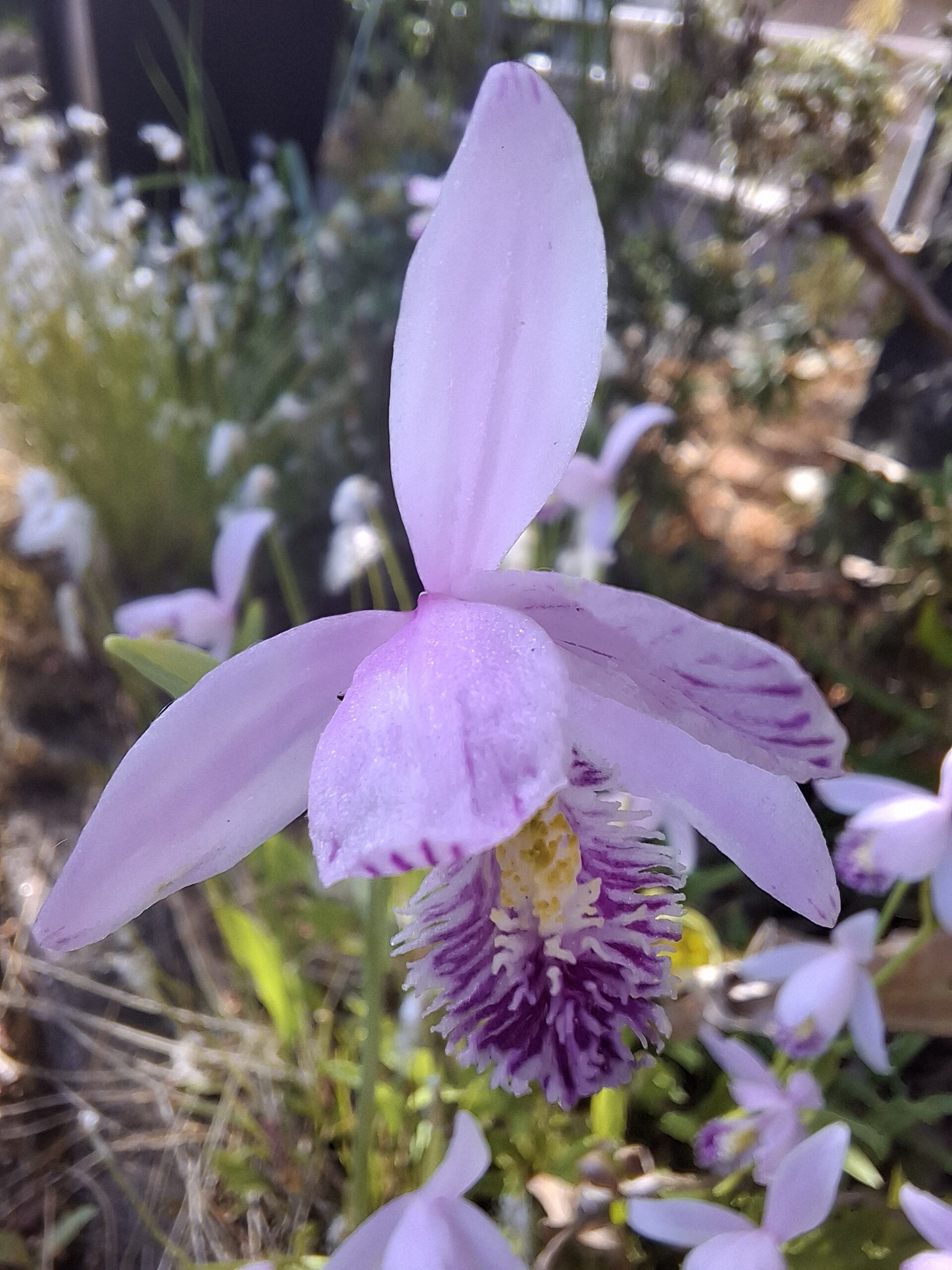
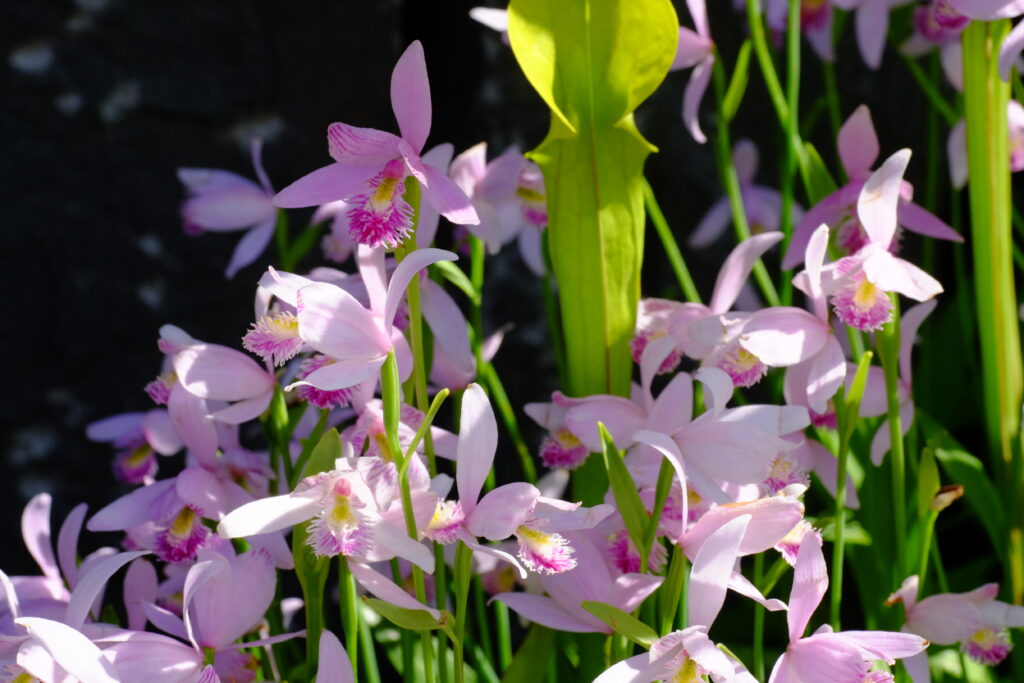
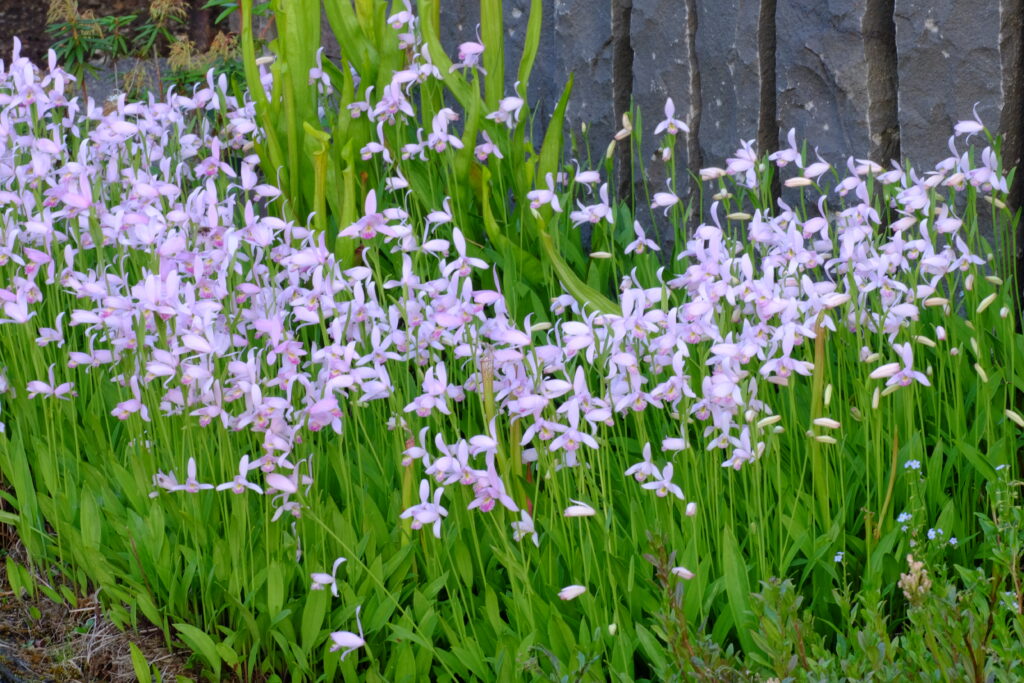
Plant Description: A single leaf at the base of the up to 25 cm tall inflorescence, bearing only one flower. The plants form large groups and clumps via a branching rhizome. Flowers up to 2 cm in size, white, pink, or red. Lightly scented. The lip is strikingly decorated with fringes and bristles.
Pogonia ophioglossoides
Cultivation: Pogonia are plants of moist, sunny soils and grow in raised bogs, near springs, or along the edges of bodies of water. The leaves appear in early May, and the plants flower a few weeks later. They are easy to cultivate with consistent moisture during the summer. Even when grown in pots, fertilization is unnecessary.
Pogonia ophioglossoides: This is a beautiful and very rewarding garden orchid. It is completely winter-hardy in Central Europe. Under favorable conditions, it quickly forms large clumps that bloom reliably every year.
Pogonia ophioglossoides
Recommended soil mixtures: The substrate must be acidic and lime-free, with a pH value of 4 to 5. Simple, minimally decomposed peat is very suitable. Under favorable conditions, sphagnum moss will form, in which the plants thrive.
Recommended reading: Orchideen im Garten: Use, care and propagation. Gerd Kohls and Ulrich Kähler, 1993. Parey ISBN 3 489 636244. Orchideen für den Garten: European and tropical terrestrial orchids. Alfons Bürger, 1992. Ulmer ISBN 3 8001 64876. Hardy orchids. Phillip Cribb and Christopher Bailes, 1989. Timber Pr. ISBN 0 88192 147 5. Das Moor im eigenen Garten: Moorgärten anlegen, gestalten und pflegen. Erich Maier, 2000. Parey, ISBN 3 8263 3301 2. Orchids of Indiana. Michael A. Homoya, 1993 by Indiana Academy of Science. ISBN 0 253 32864 0.
Manage consent
To provide you with an optimal experience, we use technologies such as cookies to store and/or access device information. If you consent to these technologies, we can process data such as browsing behavior or unique IDs on this website. If you do not give or withdraw your consent, certain features and functions may be affected.
Functional
Always active
Technical storage or access is strictly necessary for the legitimate purpose of enabling the use of a specific service expressly requested by the subscriber or user, or for the sole purpose of carrying out the transmission of a message over an electronic communications network.
Preferences
The technical storage or access is necessary for the legitimate purpose of storing preferences that were not requested by the subscriber or user.
Statistics
Technical storage or access that is solely for statistical purposes.Technical storage or access is used solely for anonymous statistical purposes. Without a subpoena, the voluntary consent of your internet service provider, or additional records from third parties, the information stored or retrieved for this purpose cannot generally be used to identify you.
Marketing
Technical storage or access is required to create user profiles, to send advertising, or to track the user on one or more websites for similar marketing purposes.