Distribution:
Over 100 species, most of which are endemic to Australia. Some species are found in New Zealand, and one species is found in Indonesia, Malaysia, and New Caledonia.
Plant Description:
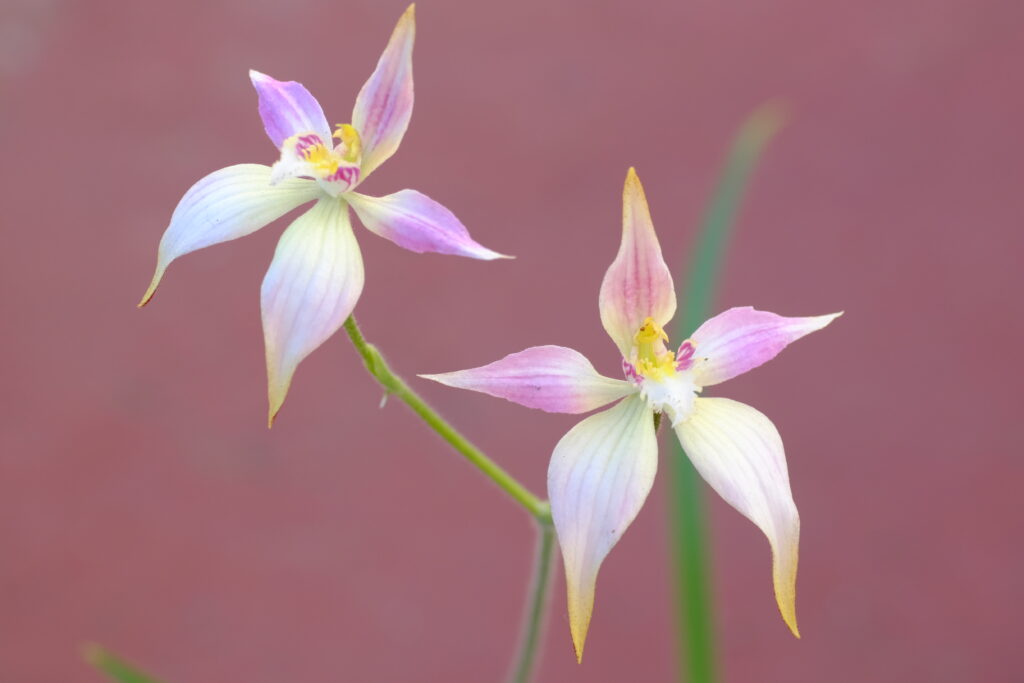
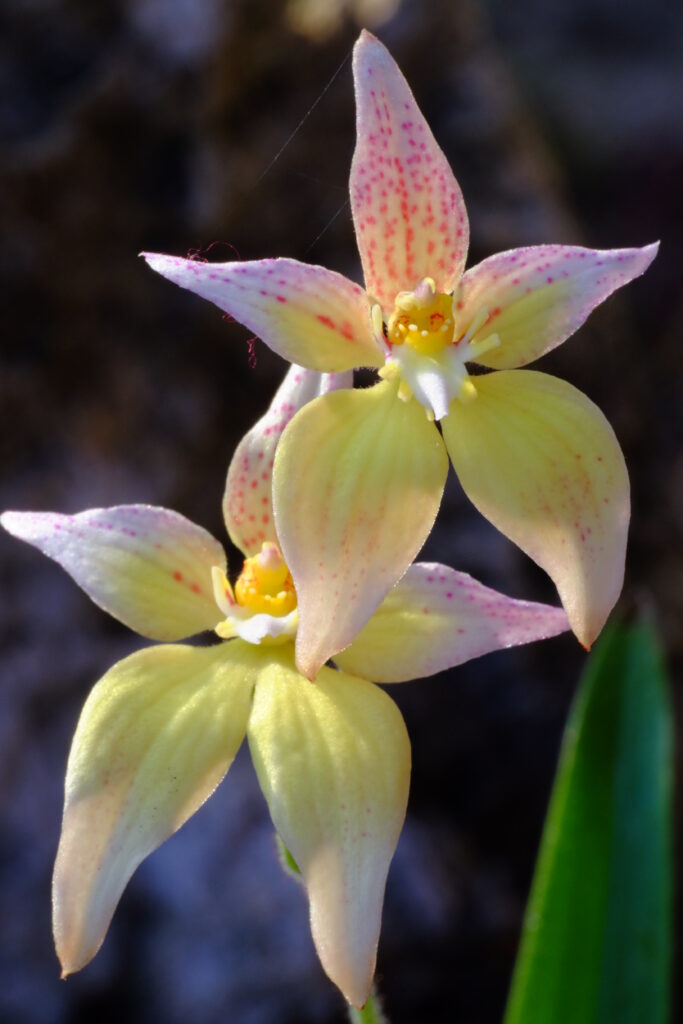
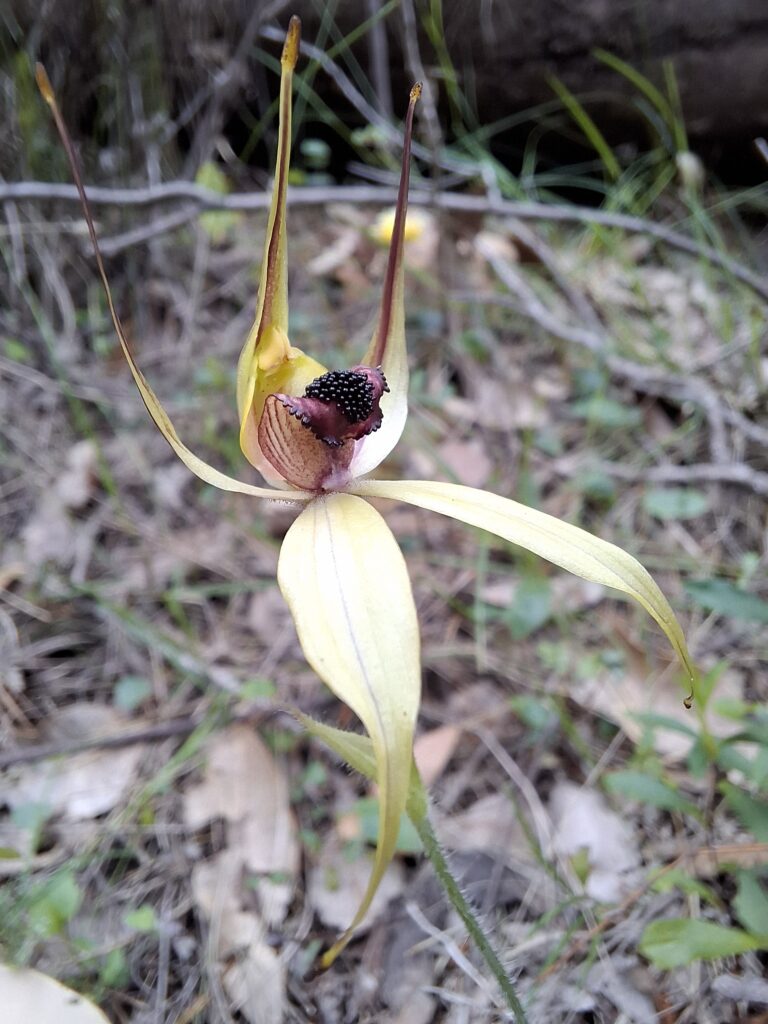
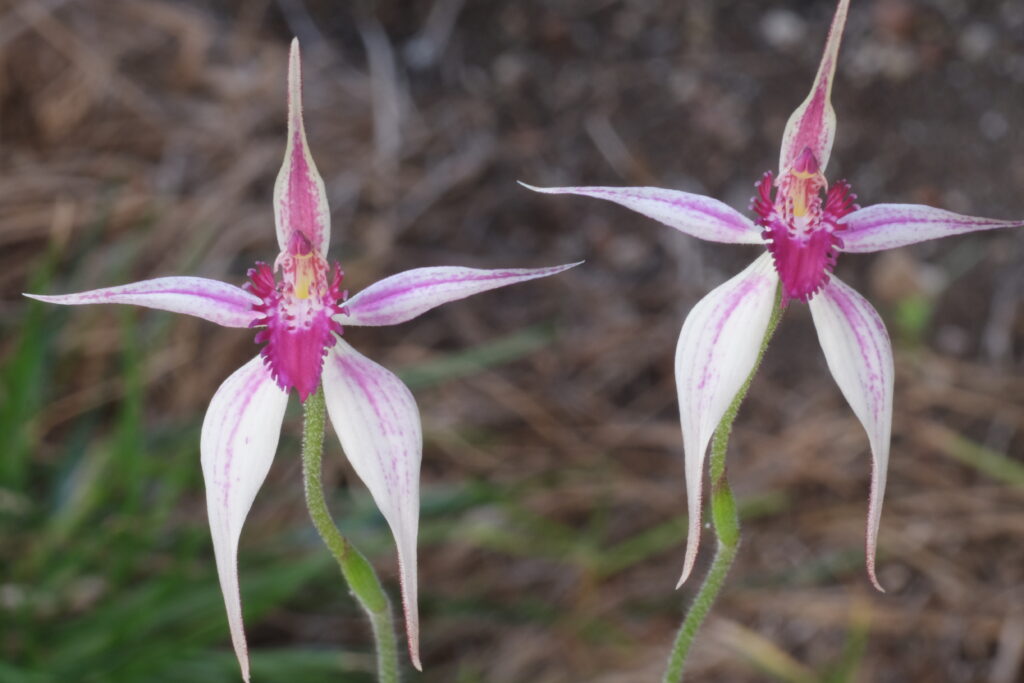
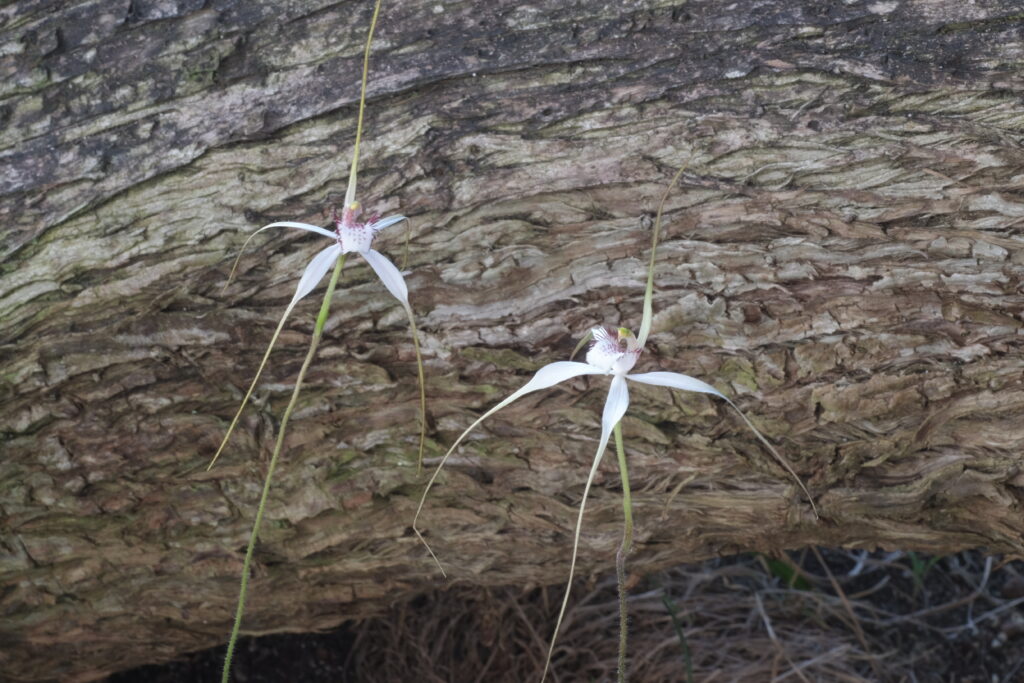
Flower spikes 5 to 90 cm tall, with only one leaf. Often the petals are very long, giving the flower the shape of a long-legged spider. Caladenia has an attractive glandular, movable labellum with a decorative callus. Many species are sex-deceptive flowers and are pollinated by male thynnoid wasps (spider orchids). The other species are nutrient-deceptive flowers (fairy orchids).
Recommended soil mixtures:
80 to 90% mineral, depending on availability. Volcanic granules, volcanic stratification, pumice, Seramis, 10 to 20% acidic organic components. Rhodohum has proven effective. The potting soil must be well-draining, with a pH of 5 to 6. An organic substrate consisting of 90% Rhodohum with 10% mineral components also yields good results. The mycorrhizal fungi of Caladenia grow primarily in the topsoil. Therefore, a top layer of wood fibers or pine needles promotes growth. For mineral substrates, fertilize with slow-release fertilizer. Approximately 0.5g of Klanz autumn fertilizer per plant at the bottom of the pot. See also potting soil.
Recommended reading:
Cultivation of Australian native orchids produced by the Australasian Native Orchid Society, Victorian group Inc. Helen Richards, Rick Wootton, Rick Datodi.
Orchids of Western Australia produced by the Western Australian Native Orchid Study and Conservation Group. Kingsley W. Dixon, Bevan J Buirchell, Margret T. Collins
Native orchids of Australia. David Jones, 1993. Reed, ISBN 0 7301 0189 4.
Orchids of south-west Australia. Noel Hoffmann and Andrew Brown, 1992. University of Western Australia Press, ISBN 1 875560 13 0.
The Orchids of Victoria. Gary Backhouse and Jeffrey Jeanes, 1996. Melbourne University Press, Carlton, Victoria. ISBN 584.1509945.
Field Guide to the Orchids of New South Wales and Victoria. Tony Bishop, 2000. Second edition. University of New South Wales Press. ISBN 0 86840 706 2.